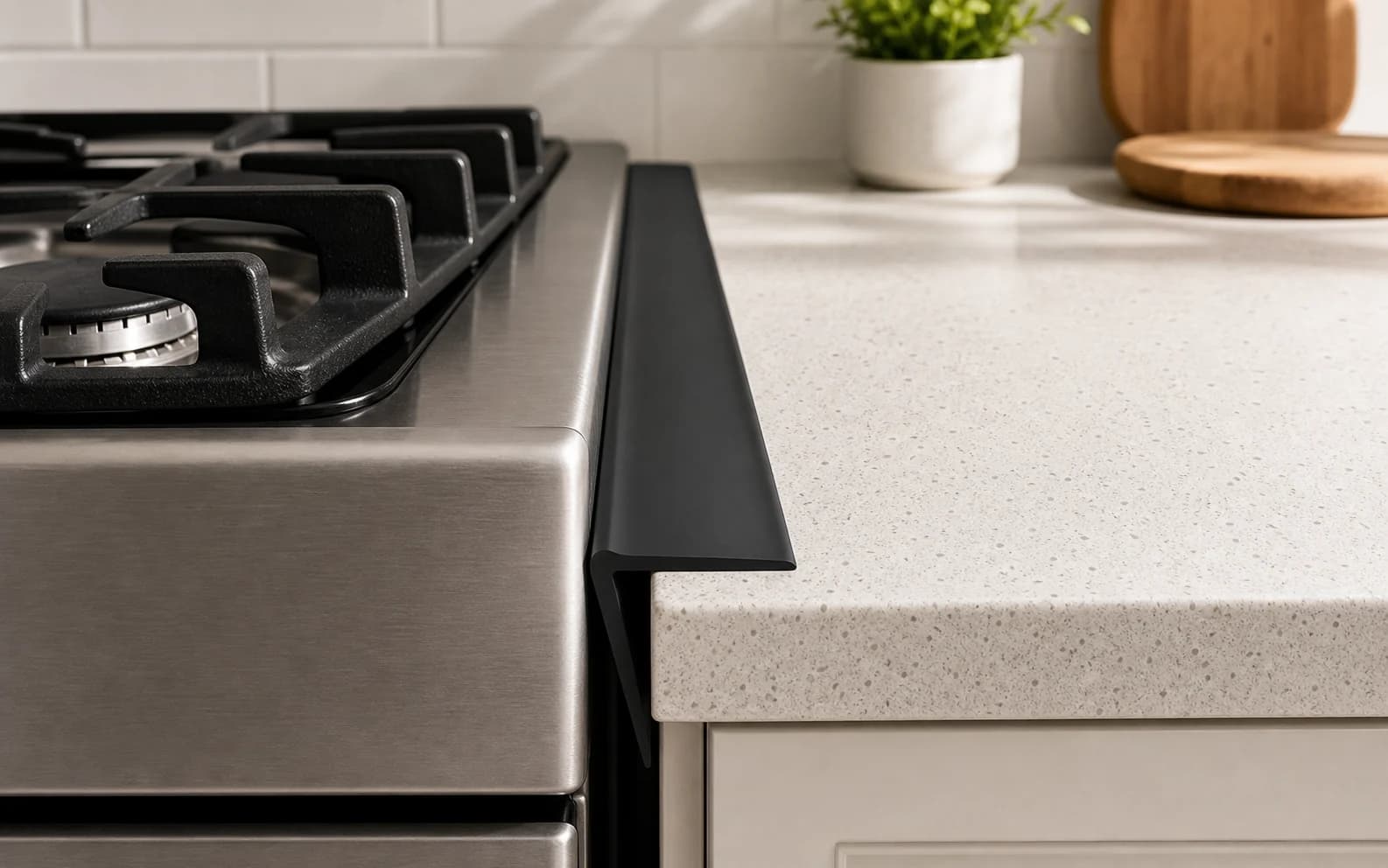
If your stove is higher than your countertop, look for a flexible gap cover with a bridge surface and a support that extends into the gap. A flat strip may rest on the higher surface while leaving an opening above the lower one.
Why a height difference changes the fit
Many stove gap covers are designed as flat strips. They work best when the stove edge and countertop are close to the same height. When one surface is higher, a flat strip may:
- tilt toward the lower surface;
- curl or lift along one edge;
- move as the stove is cleaned;
- leave a path for crumbs and grease.
The problem is not simply the width of the gap. The cover also has to handle the vertical change between the two surfaces.
What to look for
A bridge wide enough to span the opening
A wider top surface can cross the gap instead of depending on both edges to be level. FlexBridge uses a 2-inch bridge surface.
A flexible element inside the gap
A compression rib can adapt to different gap widths and help the cover maintain contact. FlexBridge is designed for gaps from 0.1 to 0.8 inches wide.
Support below the surface
A lower support helps hold the cover in position rather than asking a thin flat strip to balance across the opening.
Measure before you buy
Measure the gap at the front, middle and back. Then measure the stove length and note which surface is higher. FlexBridge is available in 21-inch and 25-inch lengths and can be trimmed when needed.
Safety reminder
Keep any silicone gap cover away from open flames and exposed heating elements. After installation, confirm that it does not interfere with burners, controls or ventilation.
The right solution should bridge the actual shape of your kitchen gap—not only cover it from above.