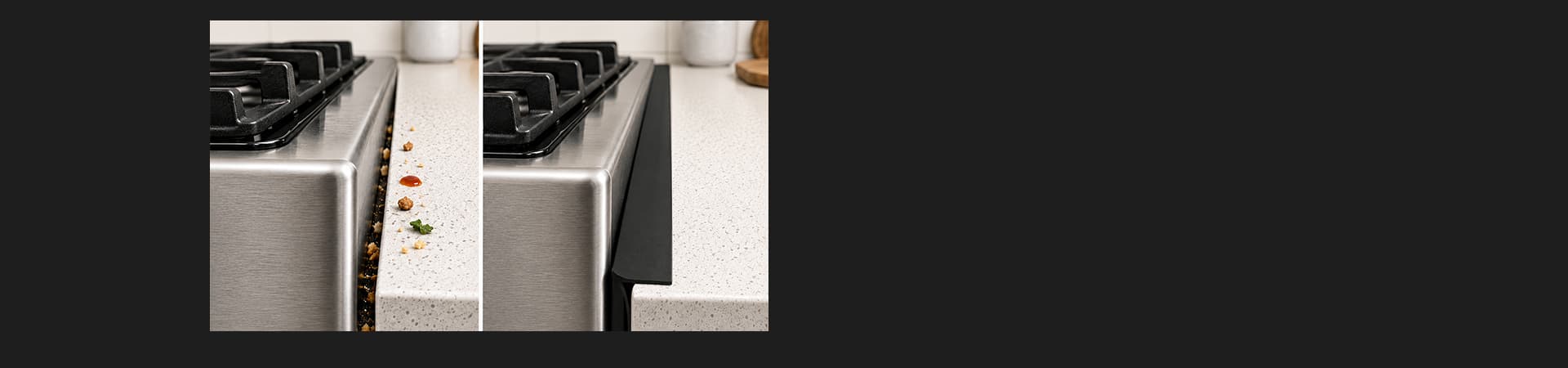
A flat stove gap cover can curl, slide or leave an opening when the stove and countertop are not level, the gap changes width or the strip has no structure below the surface to hold it in place.
The surfaces are not the same height
This is one of the most common reasons a flat strip fails. The cover rests on the higher edge and angles toward the lower edge. That can create a visible opening or make one side lift.
The gap changes from front to back
Kitchen appliances are not always perfectly centered. A gap may be narrow at the front and wider at the back. A strip that feels tight in one area can be loose in another.
Measure the gap at three points before choosing a cover.
The strip is too narrow
A narrow cover has less surface area to bridge the opening. If the strip barely reaches both sides, normal wiping or appliance movement can shift it.
There is no support inside the gap
A flat strip depends mostly on surface contact. A flexible rib or support inside the gap can help the cover adapt and maintain its position.
FlexBridge combines:
- a 2-inch bridge surface;
- a flexible compression rib for 0.1 to 0.8-inch gaps;
- a 1.3-inch lower support profile.
Heat or storage changed the shape
If a cover was folded tightly or stored incorrectly, it may need time to return to its normal shape. Always keep gap covers away from open flames and exposed heating elements.
When to replace a cover
Replace the cover if it is torn, permanently distorted or no longer remains safely positioned. A properly fitted cover should block the opening without interfering with the stove.